1. Executive Summary
“Interactive Commerce” — the convergence of immersive engagement and real-time transaction — has a concrete technical foundation as of January 2026: the MCP Apps extension, which lets an MCP server render an actual interactive interface directly inside an agent conversation, not just return text. The extension shipped as an official Model Context Protocol standard on January 26, 2026, co-authored by Anthropic and OpenAI with the community mcp-ui project, and launched the same day inside Claude with nine partners including Canva, Figma, and Slack; reference client Goose explicitly lists checkout flows among its supported interactive experiences.
Layered on top of that rendering standard, a full agentic-commerce payment stack has emerged through mid-2026: x402 returns HTTP 402 payment-required responses inside MCP tool calls, while OpenAI’s Agentic Commerce Protocol (ACP), Google’s Universal Commerce Protocol (UCP), and Google’s AP2 all treat MCP as the underlying data plane. Coinbase’s Agent.market alone processed roughly $50 million in cumulative x402 transaction volume by April 2026. For a fintech-grade platform, the “Engagement Layer” this report envisions is no longer a conceptual bet — it is a specific, already-standardizing protocol stack to build against.
2. The Convergence of Ads & Transactions, Now Standards-Based
• From impressions to attention, rendered: MCP Apps preserves agent control by design — a click inside a rendered checkout UI bubbles up as an intent the agent mediates, rather than the interface reaching directly into application state, which keeps Attention Quality signals auditable at the point of interaction.
• Frictionless checkout, standardized: the emerging pattern across vendors is MCP for catalog and product discovery, paired with a dedicated commerce protocol (ACP, UCP, or x402) for the actual payment rail — exactly the “engagement plus transaction” convergence this report calls for, now with named, adopted protocols on each side.
• Native in-scene formats: Shopify’s Storefront MCP and open-sourced MCP UI reference implementation show product carousels, selectors, and checkout buttons rendering natively inside an agent’s conversation — the flat, text-based precursor to true in-scene 3D commerce, and a proof point that in-context commerce UI already works in production.
• Retail-specific adoption: Microsoft introduced a Dynamics 365 Commerce MCP server at NRF 2026 specifically to let retail data and transactions be exposed once and called by any supported agent, rather than integrated bespoke per surface — direct precedent for exposing 3D-scene inventory the same way.
3. Technical Infrastructure: Rendering, Discovery, and Payment as Separate Layers
The SDK-first, edge-adjacent architecture remains the right physical foundation. MCP Apps and the commerce-protocol stack now give it three distinct, standardized layers to build against instead of one monolithic checkout flow.
• Rendering layer (MCP Apps): interactive experiences — product views, cart state, checkout controls — render directly inside the agent’s context via secure iframe or remote DOM, with security reviewed as part of the extension’s design from the outset, relevant to any in-scene 3D checkout surface.
• Discovery and catalog layer (MCP): spatial-node ad inventory and product catalogs are exposed once as MCP resources and tools, callable by any supported agent — the same pattern Shopify, Microsoft, and Akeneo have already shipped for commerce catalogs.
• Payment layer (x402 / ACP / UCP / AP2): kept deliberately separate from the discovery layer, so the platform’s proprietary bidding and Attention Quality logic is not coupled to any single commerce-payment vendor’s rail.
• Token cost discipline: current guidance on production Shopify MCP servers recommends “dynamic context slicing” — sending only high-level catalog data during browsing and detailed shipping/validation context only at checkout — a directly applicable cost-control pattern for high-QPS in-scene commerce.
4. Strategic Opportunities for Stakeholders
• Curated marketplaces: SPO gains are reinforced by MCP’s “expose once, call from anywhere” model, which reduces the number of bespoke integrations a content creator or advertiser needs to maintain across agent surfaces.
• Industry standardization: IAB Tech Lab participation should extend to tracking how MCP Apps and the commerce-protocol stack (x402/ACP/UCP) intersect with existing interactive CTV and 3D format standards, given how fast retail and payments vendors are converging on MCP as the shared data plane.
• Value-exchange models: because MCP Apps preserves an explicit intent-mediation step for every UI interaction, consent-based participation claims can now point to a concrete technical checkpoint rather than only a policy commitment.
5. Talent Landscape: Recruiting for the Rendering-and-Commerce Stack
• Recruit engineers with direct MCP Apps and agentic-commerce-protocol experience alongside classical 3D-rendering and real-time bidding backgrounds — both skill sets are now needed to ship true in-scene checkout.
• Feature real engineering deep dives on building secure, intent-mediated checkout UI inside a 3D scene — concrete rendering-and-payment integration work is stronger recruiting content than abstract “engagement layer” language.
• Keep skill-first rotations, adding exposure to MCP Apps UI design and commerce-protocol integration given how central both have become to shipping frictionless 3D checkout.
6. Future Outlook
• Agentic buying and checkout: with MCP Apps live in production clients and a commerce-protocol stack already processing real transaction volume, autonomous bid-and-buy guardrails are an engineering integration problem now, not a multi-year research bet.
• Embedded infrastructure: proprietary discovery and bidding logic remain the platform’s to own; payment execution should stay pluggable across ACP, UCP, x402, and future rails rather than locked to one vendor’s checkout stack.
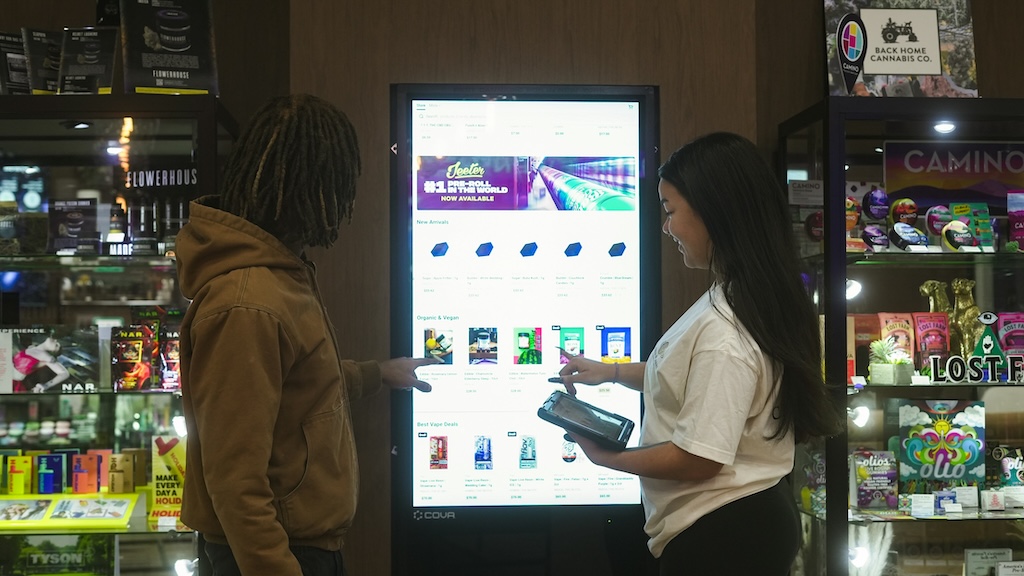
• The urban engagement layer: as interactive kiosks and AR surfaces adopt the same MCP Apps rendering pattern already proven in chat and IDE clients, the same discovery/rendering/payment separation should extend cleanly to physical urban touchpoints.
References
1. Model Context Protocol Blog, “MCP Apps — Bringing UI Capabilities to MCP Clients.” https://blog.modelcontextprotocol.io/posts/2026-01-26-mcp-apps/
2. Jatinkumar Parmar, “MCP Apps — Bringing UI Capabilities To MCP Clients,” Medium (Jan. 2026). https://jhparmar.medium.com/mcp-apps-bringing-ui-capabilities-to-mcp-clients-10894af48cda
3. Anant, “MCP UI: The Open Standard for Interactive Agent Interfaces — And How to Ship It in Any Language.” https://anant.us/blog-category/mcp-ui-the-open-standard-for-interactive-agent-interfaces-and-how-to-ship-it-in-any-language/
4. Eco, “MCP and Payments: A 2026 Guide.” https://eco.com/support/en/articles/14845480-mcp-and-payments-a-2026-guide
5. Weaverse, “Shopify Storefront MCP Is Live — What It Means for Headless Commerce in 2026.” https://weaverse.io/blogs/shopify-storefront-mcp-hydrogen-2026
6. Shopify Engineering, “MCP UI: Breaking the Text Wall with Interactive Components.” https://shopify.engineering/mcp-ui-breaking-the-text-wall
7. Presta, “Shopify MCP Server Guide: Building for Agentic Commerce 2026.” https://wearepresta.com/shopify-mcp-server-the-standardized-interface-for-agentic-commerce-2026/
8. Microsoft, “Dynamics 365 Commerce Introduces Agentic Capabilities with Model Context Protocol (MCP).” https://www.microsoft.com/en-us/dynamics-365/blog/it-professional/2026/06/29/dynamics-365-commerce-introduces-agentic-capabilities-with-model-context-protocol-mcp/
9. Vellum, “MCP UI & The Future of Agentic Commerce.” https://www.vellum.ai/blog/mcp-ui-and-the-future-of-agentic-commerce
10. PPC Land, “IAB Tech Lab Releases CTV Ad Format Standards for Public Comment.” https://ppc.land/iab-tech-lab-releases-ctv-ad-format-standards-for-public-comment/
11. Bannerflow, “The Future of Programmatic Advertising: 2026 and Beyond.” https://www.bannerflow.com/blog/the-future-of-programmatic-advertising-what-to-expect-in-2026-and-beyond